Independent prototype development and engineering evaluation
We do feasibility evaluation, prototype research, and early-stage engineering development of various high-performance ultrasonic transducers, including:
- Water level transducers
- Oil acoustic transducer, caliper, televiewer, monopole, dipole transducers as well as phased arrays designed for downhole environments.
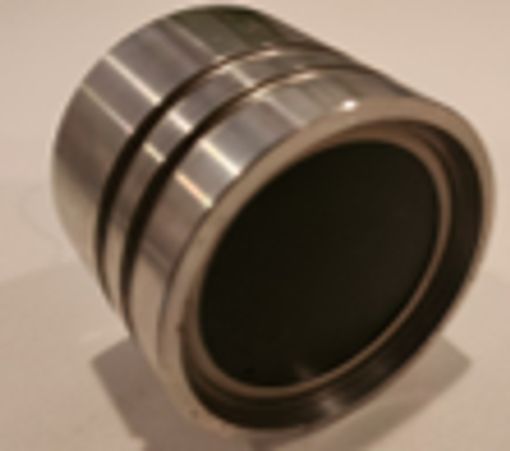
Application case: Caliper Televiewer
Ultrasonic transducers are a core component of downhole caliper and acoustic televiewer tools used in oil and gas wells for high-resolution borehole imaging and diameter measurement. These tools operate by transmitting ultrasonic pulses into the borehole fluid and measuring the echo return time and amplitude reflected from the borehole wall. The travel time of the reflected signal is used to calculate the borehole radius and generate precise caliper measurements, while variations in echo amplitude and waveform provide detailed information about formation properties, fractures, and surface roughness. In acoustic televiewer systems, continuous rotation and high-frequency ultrasonic scanning enable the creation of 360-degree borehole images, allowing identification of fractures, breakouts, bedding planes, and lithological features. Differences in acoustic impedance and surface reflectivity between rock types and fluid-filled features produce distinct signal responses, enabling accurate formation characterization. Designed for operation in oil-based mud (OBM), water-based mud (WBM), ultrasonic caliper and televiewer transducers deliver reliable performance for wellbore stability analysis, reservoir evaluation, and drilling optimization, making them essential tools
Monopole, dipole and quadrupole ultrasonic transducers
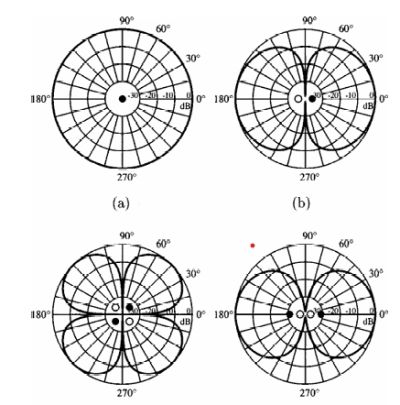
Monopole, dipole, and quadrupole ultrasonic transducers are fundamental acoustic sources used in downhole logging tools for formation evaluation, borehole imaging, and acoustic wave propagation analysis in oil and gas wells. A monopole transducer generates axisymmetric pressure waves that propagate radially into the formation, making it ideal for measuring compressional wave velocity, borehole fluid properties, and basic formation characterization. In contrast, a dipole transducer produces a directional acoustic field that excites flexural (shear-related) waves along the borehole wall, enabling accurate evaluation of shear wave velocity, formation stiffness, and anisotropy, even in slow formations where conventional monopole measurements fail. A quadrupole transducer further enhances directional sensitivity and mode control, improving the detection of complex formation features, fractures, and stress-induced anisotropy. These transducers operate in challenging environments including oil-based mud (OBM), water-based mud (WBM), where variations in acoustic impedance, attenuation, and borehole geometry significantly influence signal behavior.